The Amalfi Coast: Cliffside Highway Realities, Ferry Networks & High Ravello
Evaluating road transit bottlenecks against maritime ferry links, vertical stair navigation, and high-altitude cliff sanctuaries.
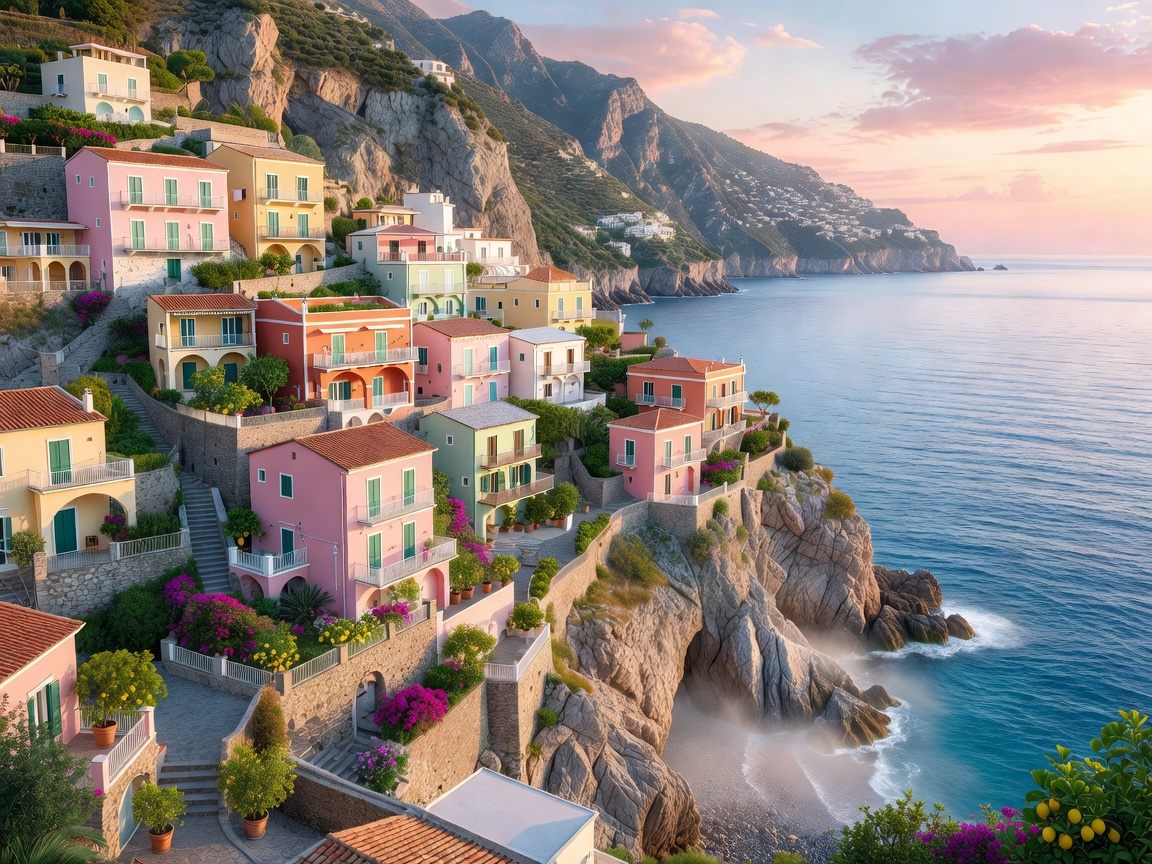
1. Transit Reality: Roads (SS163) vs. Maritime Ferries
The Amalfi Coast (Costiera Amalfitana) stretches roughly 50 kilometers along the southern flank of the Sorrentine Peninsula. While famed in vintage automotive imagery, the Strada Statale 163 (the coastal road) is a narrow, continuous ribbon of blind hairpin turns, cliff-hugging stone parapets, and heavy seasonal gridlock. Alternate-plate driving regulations often restrict private rental vehicles during summer peak hours, and parking garage fees in Positano and Amalfi town routinely exceed €8 to €12 per hour.
For almost all independent travelers, passenger ferries represent the superior transit medium between April and late October. Operators such as Travelmar connect Salerno, Amalfi, Positano, Minori, and Maiori. Traveling by ferry eliminates traffic delays, provides superior panoramic viewpoints of the dramatic cliffs, and docks directly at the town footpaths.
2. Positano: The Vertical Village and Pedestrian Gradient
Positano is organized almost entirely on a steep vertical plane. Movement between the coastal highway (Via Pasitea / Via Cristoforo Colombo) and the primary beach (Spiaggia Grande) takes place via hundreds of uneven stone steps known as scalinatelle. Travelers carrying heavy luggage should arrange luggage porter services from the ferry pier or upper roadway rather than attempting to haul bags up the cliffside.
To experience coastal vistas without the dense midday tour crowds on Spiaggia Grande, follow the cliff pathway around Punta Rizzolo to the quieter, pebble-strewn Fornillo Beach. For hiking enthusiasts, the high mountain path known as the Path of the Gods (Sentiero degli Dei) runs from Bomerano above the coast down to Nocelle, terminating in a descent into Positano via 1,700 stone stairs.
3. Amalfi Town & The Ascent to Ravello
Amalfi town serves as the primary regional transport junction: buses depart here for upper villages, and passenger ferries link to Capri, Naples, and Salerno. The centerpiece of the town is the Cathedral of St. Andrew (Duomo di Amalfi), featuring Arab-Norman striped stone architecture and a 62-step central staircase ascending from the bustling Piazza del Duomo.
Ascending to Ravello
Perched 350 meters directly above Amalfi, Ravello has no maritime access. Reach it by SITA bus from the Amalfi harbor or via private taxi. Attempting to walk up the pedestrian steps from Amalfi or Atrani requires climbing over 1,200 continuous stone steps under direct sunlight.
Ravello offers a serene escape from seaside crowds. The historic Villa Rufolo and Villa Cimbrone feature tranquil cliffside gardens; Villa Cimbrone’s famed "Terrace of Infinity" (Terrazza dell'Infinito) presents sweeping 180-degree panoramas over the Gulf of Salerno.
4. Strategic Village Comparison Matrix
| Village | Elevation & Topography | Transport Connections | Atmosphere & Best For |
|---|---|---|---|
| Positano | Very steep vertical cascade down to sea level | Ferries, local internal shuttles, SITA bus | Boutiques, dramatic photography, upscale dining |
| Amalfi | Moderate grade along valley floor; harbor beach | Central bus hub, ferry terminus | History lovers, active transit hub connecting inland paths |
| Ravello | High mountain shelf (365m above sea level) | Buses and taxis only; no ferry service | Quiet retreats, botanical gardens, classical music |
| Minori & Maiori | Flatter coastal strips with broader beaches | Ferry stops, SITA buses | Families, travelers seeking lower step counts and local bakeries |
5. Maritime Produce & Terraced Lemon Groves
The microclimate of the Sorrentine Peninsula and Amalfi Coast supports specialized agricultural terraces (macere) devoted to the cultivation of Sfusato Amalfitano lemons—large, thick-rinded, highly aromatic citrus used in local pastry creams and authentic artisanal Limoncello.
Regional coastal menus center on freshly caught seafood: Scialatielli ai frutti di mare (thick hand-rolled ribbons of pasta with shellfish), grilled local sea bass (spigola), and fresh mozzarella wrapped in lemon leaves and grilled over coals. Always verify whether seafood is priced by portion or by weight (all'etto) before ordering whole fish.