Florence: Renaissance Mastery, Brunelleschi’s Dome & The Oltrarno Workshops
An in-depth guide to timed gallery admissions, walking the Arno banks, and understanding Florentine culinary heritage.
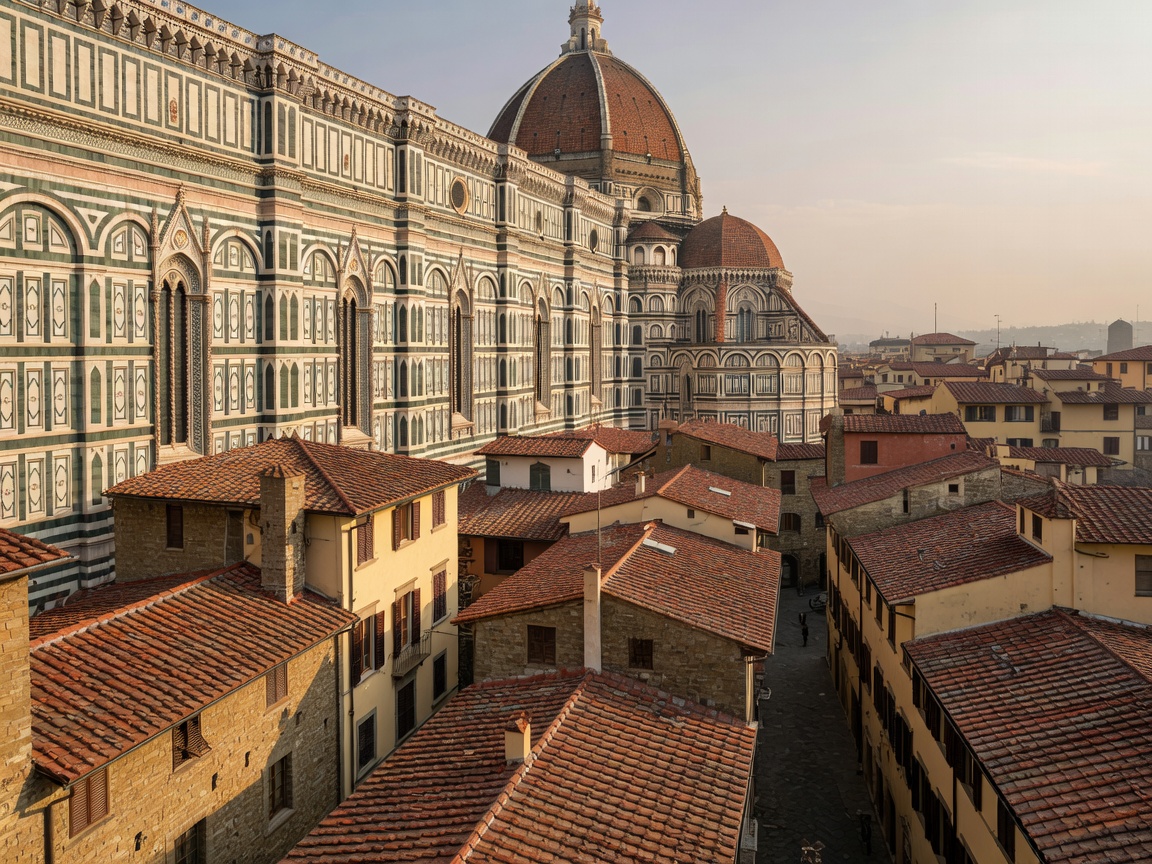
1. The Duomo Complex: Cathedral, Cupola & Campanile
The cathedral of Santa Maria del Fiore represents the architectural heart of Florence. While the ground floor interior of the main church is open to the public without admission fees, access requires waiting in a snaking open-air queue across Piazza del Duomo that offers minimal shade. By contrast, ascending Brunelleschi's revolutionary double-shell dome requires a specific timed pass (the Brunelleschi Pass), which grants admission to the dome climb, Giotto's Bell Tower, the Baptistery of San Giovanni, the crypt of Santa Reparata, and the Opera del Duomo Museum.
The dome climb spans 463 stone steps with no elevator alternative. As climbers approach the upper lantern, passages become exceedingly narrow, winding directly between the inner and outer structural shells. Visitors prone to severe claustrophobia or vertigo should consider opting for Giotto’s Bell Tower instead, which provides similar panoramic views framed by safety grating and intermediate resting landings.
2. The Gallery Circuit: Uffizi, Accademia & Bargello
Experiencing the high Renaissance masters in Florence hinges on careful advance booking through the official state museum reservation portal (B-Ticket). Third-party vendors often bundle unnecessary tours or charge substantial markups over the official reservation surcharge.
Booking Protocols for the Major Galleries
Uffizi Gallery reservations should be secured at least three to four weeks ahead during peak periods (April through October). Visitors must present printed or digital vouchers at Door 3 to collect physical tickets before queuing at Door 1 for security screening.
For Michelangelo's original marble David, visit the Galleria dell'Accademia during early morning or evening hours. Do not overlook the Bargello National Museum, located in a fortified medieval palace: it houses supreme sculptural works by Donatello, Michelangelo, and Cellini with only a fraction of the Uffizi’s crowd volume.
3. Crossing the Arno: Ponte Vecchio into the Oltrarno
While the north bank of the Arno contains the civic power structures of Piazza della Signoria and the monumental Uffizi corridor, crossing the historic Ponte Vecchio leads into the Oltrarno quarter. Traditionally home to leather tanneries, bookbinders, wood carvers, and goldsmiths, the Oltrarno retains an authentic neighborhood pulse around Piazza Santo Spirito.
Rather than dwelling on the crowded mid-span of Ponte Vecchio, cross via Ponte Santa Trinita for uninterrupted photographic lines toward the medieval jeweler stalls. Continue into the Boboli Gardens and the Pitti Palace to inspect the extensive Medici private collections in a quieter, parkland setting.
4. Strategic Comparison: City Experiences vs. Frictions
| Attraction / Activity | Key Advantages | Known Constraints | Practical Recommendation |
|---|---|---|---|
| Brunelleschi Dome Climb | Unparalleled view of the cathedral fresco and city panorama | 463 steps, steep narrow passage, no elevator | Book opening slot at 08:15 to avoid stair congestion |
| Uffizi Gallery | World’s foremost collection of Florentine Renaissance paintings | Museum fatigue; large crowds around Botticelli halls | Focus on specific wings; allow at least 3 hours |
| Piazzale Michelangelo | Classic postcard sunset vista over the entire Arno valley | Steep uphill walk; tour buses arrive en masse at sunset | Continue 5 minutes higher to San Miniato al Monte church |
| San Lorenzo Market | Upper floor food hall; vibrant lower produce stalls | External street stalls sell imported mass leather goods | Look for certified artisans inside Oltrarno studios instead |
5. Tuscan Gastronomy: Bistecca, Lampredotto & Chianti
Florentine cooking is grounded in agrarian roots. Key specialties include Bistecca alla Fiorentina (thick bone-in Chianina steak sold strictly by weight and served rare), hearty vegetable soups like Ribollita and Pappa al Pomodoro, and street-side tripe sandwiches known as Lampredotto simmered in broth and served with green parsley sauce on a crusty roll.
Authentic establishments will decline requests to cook a traditional Fiorentina steak well-done, as doing so destroys the texture of the cut. Pair meals with local DOCG Chianti Classico, easily recognized by the black rooster seal on the neck of the bottle.