Venice: Navigating the Grand Canal, Rialto Trading Legacy & Murano Furnaces
A study of public water transport, tidal movements, authentic island crafts, and the quiet residential sestieri.
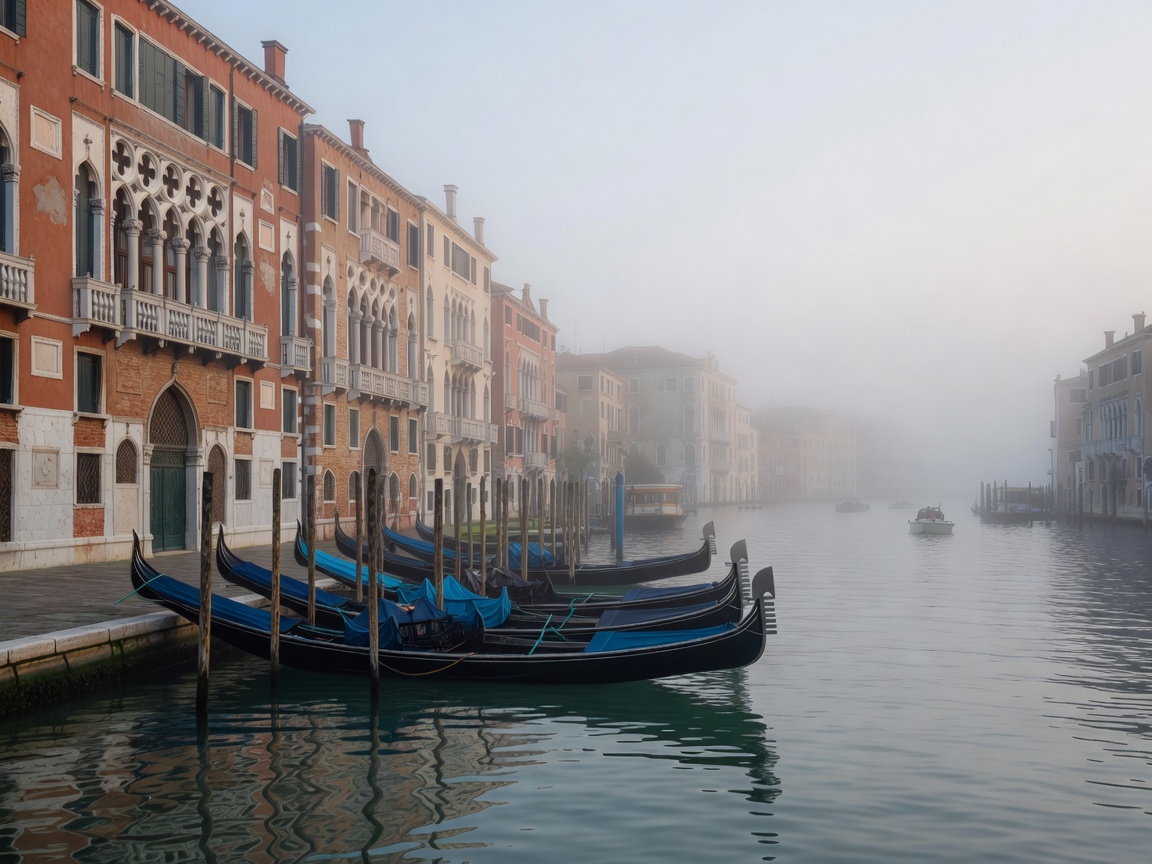
1. The Hydrological Highway: Understanding the Grand Canal
Venice is constructed across an archipelago of 118 small islands linked by over 400 stone bridges. The Grand Canal (Canalazzo) forms the central maritime artery of the historical city, slicing through six districts (sestieri). With only four permanent bridges crossing its 3.8-kilometer span—Ponte degli Scalzi, Ponte di Rialto, Ponte dell'Accademia, and Ponte della Costituzione—movement across the city depends largely on public water transport.
The municipal transit system, ACTV, operates fleets of waterbuses (vaporetti). Line 1 acts as the local stopping service, pulling into every landing stage along the Grand Canal between Santa Lucia railway station and the Lido. Line 2 operates as an express alternative, skipping minor docks. For travelers seeking an inexpensive waterborne crossing between bridges, look for public traghetti: large traditional gondolas rowed by two oarsmen that ferry pedestrians across the canal at designated points for a nominal coin fare.
2. St. Mark’s Square & Doge’s Palace Timed Protocols
Piazza San Marco represents the lowest physical point in Venice, making it the first area submerged during seasonal high-water events (acqua alta), which typically occur between October and March. The MOSE flood-barrier system now mitigates severe tidal incursions, but elevated wooden boardwalks remain available when minor high tides appear.
Accessing St. Mark’s Basilica
Timed entry tickets should be secured online to avoid standing in unshaded queues that routinely stretch around the basilica perimeter. Shoulders and knees must remain covered, and large daypacks or luggage are not permitted inside the sanctuary.
Adjoining the basilica is the Doge’s Palace (Palazzo Ducale), the historical seat of Venetian maritime power. Booking the specialized "Secret Itineraries" (Itinerari Segreti) tour grants access to the administrative chancery rooms, torture chambers, and the attic lead-roof prisons (I Piombi), famously escaped by Giacomo Casanova.
3. The Lagoon Islands: Murano, Burano & Torcello
Venturing beyond the historical center reveals the varied character of the broader Venetian Lagoon. In 1291, all Venetian glass furnaces were relocated by civic decree to the island of Murano to eliminate the risk of conflagrations in the city's densely timbered core. Today, Murano remains a center for artisanal glassblowing.
To witness legitimate furnace craftsmanship, avoid touts offering free private motorboat rides from St. Mark's—these are commercial sales operations with high-pressure showrooms. Instead, take public vaporetto lines (such as Line 3 or 4.1/4.2) to Murano Colonna or Faro and explore independent studios. Further north, the island of Burano is renowned for vibrant pastel-colored fisherman cottages and traditional needle lace, while Torcello features the 7th-century Cathedral of Santa Maria Assunta with its imposing Byzantine mosaics.
4. Sestiere Comparison & Walking Strategies
| Sestiere (District) | Visual Character | Crowd Density | Key Points of Interest |
|---|---|---|---|
| San Marco | Opulent marble facades, high-end luxury arcades | Very High (peak congestion) | St. Mark's Basilica, Doge's Palace, Museo Correr |
| San Polo & Santa Croce | Historic mercantile center, fruit/fish markets | High near Rialto Bridge; Moderate inland | Rialto Bridge, Campo San Polo, Frari Church |
| Cannaregio | Broad canals, working residential quays, historic Jewish Ghetto | Low to Moderate | Jewish Ghetto, Fondamenta della Misericordia dining strip |
| Dorsoduro | Quiet residential alleys, academic plazas, contemporary art spaces | Moderate | Gallerie dell'Accademia, Peggy Guggenheim Collection |
5. Venetian Food Culture: Bacari, Cicchetti & Spritz
The traditional food ritual in Venice is centered on the bacaro—a modest neighborhood wine bar where patrons stand at the counter to enjoy small savory bites (cicchetti) accompanied by a small glass of regional wine (an ombra) or a Select/Campari Spritz.
Typical cicchetti include toasted baguette rounds topped with whipped salt cod (baccalà mantecato), marinated sweet-and-sour sardines with onions and raisins (sarde in saor), fried meatballs (polpette), and skewered baby octopus (moscardini). Bacari hopping along Fondamenta dei Ormesini in Cannaregio provides an authentic glimpse of local life away from the commercial tourist restaurants surrounding the Rialto.